




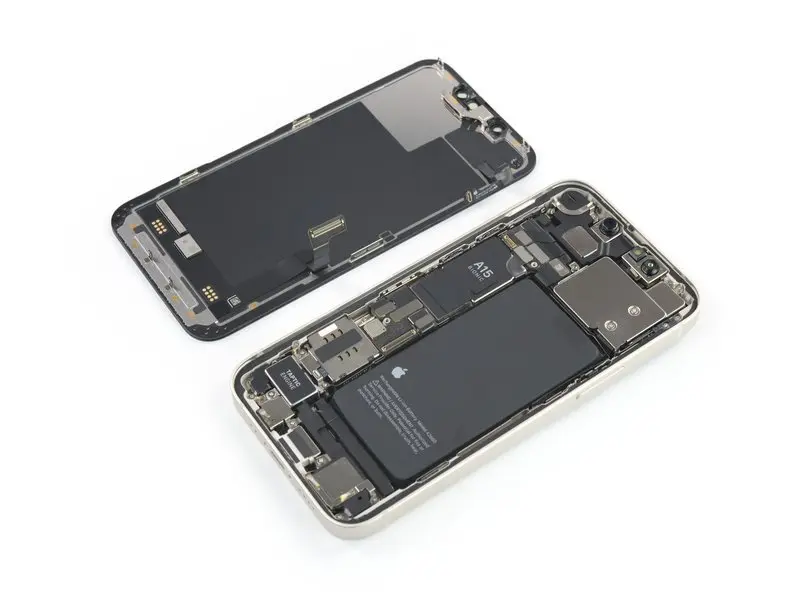
If your iPhone 13 mini screen is cracked, unresponsive to touch, or doesn’t display a screen when powered on, follow this tutorial to replace the screen (also known as the screen assembly) to restore your iPhone to normal operation.
Note: In iOS 17.6 and earlier, True Tone and Auto Brightness will be disabled after screen replacement, even with an original Apple screen. Face ID will also be disabled unless the iPhone is running iOS 15.2 or later.
In iOS 18 and later, you can use Apple’s Repair Assistant to calibrate the new screen, restoring True Tone functionality on a genuine Apple-purchased screen.
Reassembling the device requires new waterproof adhesive to re-bond the screen to the frame.
Step 1:Pentalobe Screws
Note: Before proceeding, reduce your iPhone battery to below 25%. Accidental puncture could cause a charging lithium-ion battery to catch fire and/or explode.
Power off your iPhone before beginning disassembly.
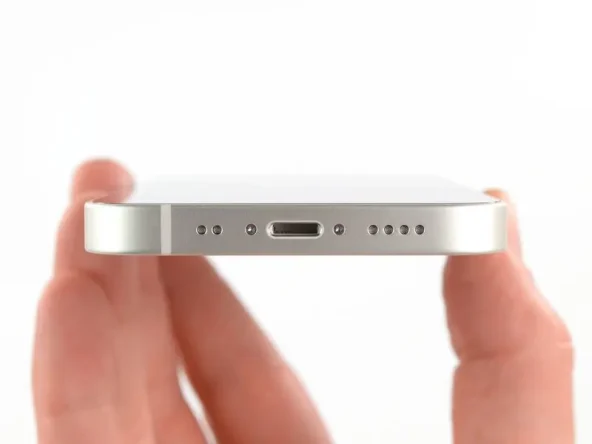
Remove the two 6.8mm long pentagonal P2 screws located on the bottom edge of your iPhone.
Opening the iPhone display will compromise its water seal. Have a spare seal prepared before performing this step, or if reassembling the iPhone without replacing the seal, take care to avoid liquid exposure.
Step 2: Gently lift the screen
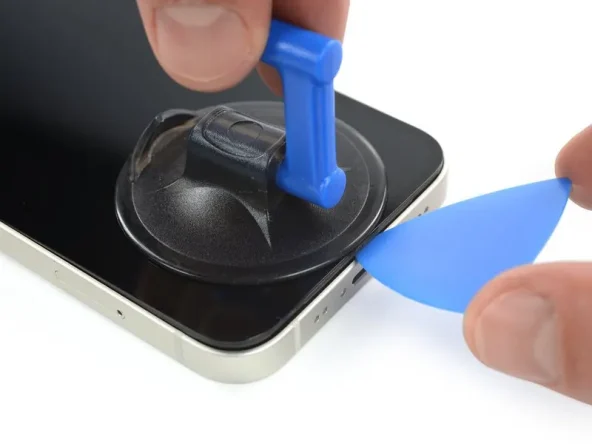
Using firm, steady force, pull up the suction cup to create a small gap between the screen and the mid-frame.
Insert the pry tool into the gap. The screen has a plastic support; ensure the pry tool is inserted below the support, otherwise it will damage the screen.
Make sure the pry tool is inserted between the plastic support and the metal mid-frame. Inserting it between the plastic support and the glass cover will damage the screen.
The waterproof adhesive between the screen and the bezel is very sticky and requires considerable force to pry open even slightly. If you have difficulty opening the gap, continue heating and gently shake the screen up and down to soften the adhesive strip until a sufficient gap is created to insert the tool.
Step 3: Separate the adhesive on the right.
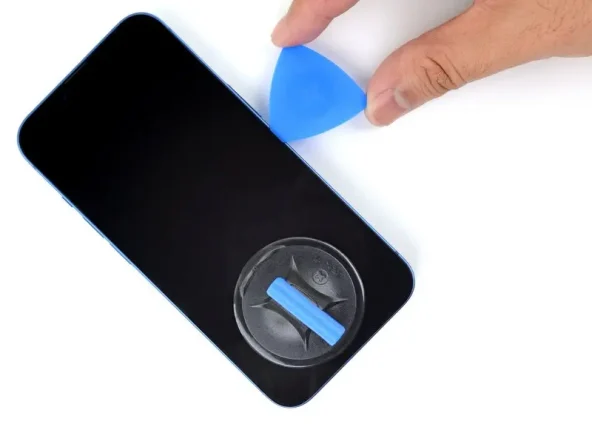
Use the triangular pry tool to pry open the waterproof adhesive by sliding it along the bottom right corner and right edge of the iPhone.
Do not insert the pry tool more than 3 mm into the phone. Also, if you encounter particularly stubborn adhesive, do not force it open, as this may damage internal components.
Continue with the following steps, without removing the pry tool; leave it in the top right corner of the phone.
Step 4: Heat the right side frame
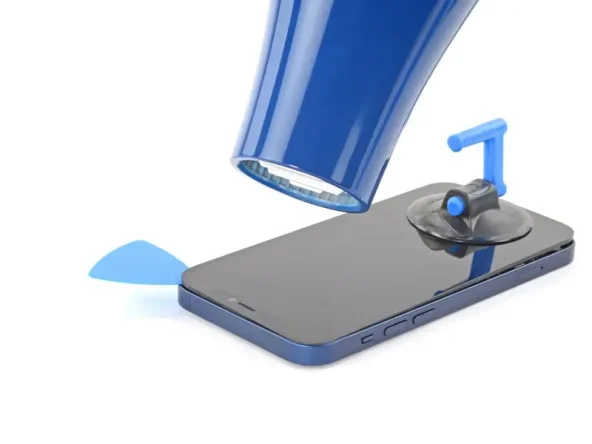
Heat the right edge of your iPhone (the side with the power button) with a hairdryer. Continue heating for 90 seconds, or stop heating when the screen is just too hot to touch.
Step 5: Cut open the waterproof adhesive on the left side
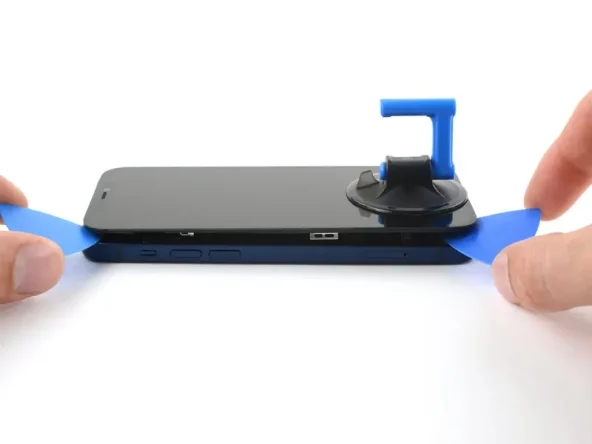
Insert the second triangular pry tool into the bottom left corner of the iPhone.
Twist both pry tools simultaneously until the latch on the left side releases.
The twisting action should be gradual.
If the waterproof adhesive is difficult to remove, you can heat the left edge again.
Step 6: Open iPhone 13 mini
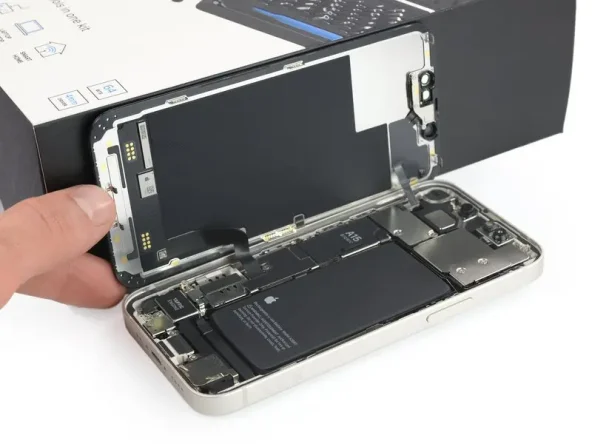
Turn your phone so the right edge is facing you.
Flip the screen upwards from the edge, like opening a book cover.
Don’t remove the screen yet; several fragile cables connect it to the motherboard.
While working with the iPhone’s internals, you can prop the screen up against a sturdy object.
When reassembling, start closing the screen from the top. Flip the screen down to align with the frame, first pressing down on the top and engaging the clips, then pressing down on the other three edges. If pressing down and engaging the clips is difficult, check if the clips around the screen are bent.
Step 7: Unscrew the screws on the battery and monitor cable clip cover.
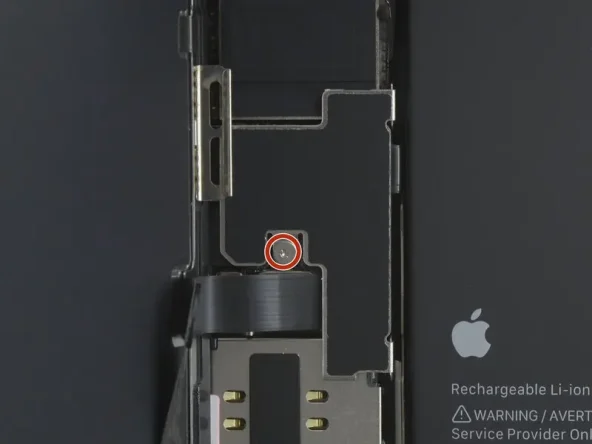
Remove the 1.2 mm long Y000 screws that secure the battery and display interface cover.
Throughout the repair process, to prevent damage to the phone, remember the location of each screw and ensure they are all back in their original positions when reassembling.
Before attaching the screen, test the phone’s functionality by turning it on; otherwise, you might waste a sheet of waterproof adhesive. Remember to power the phone off completely after testing.
Step 8: Disconnect the battery
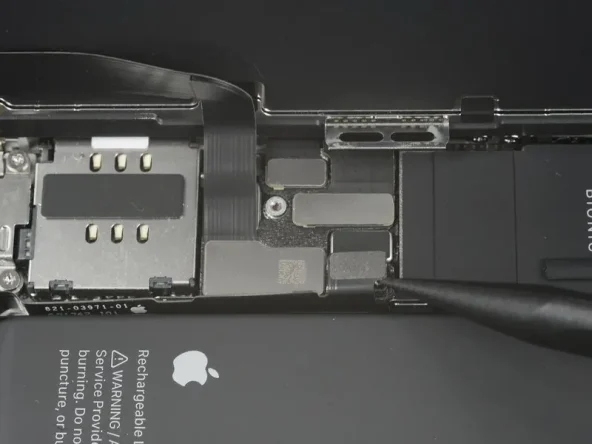
Use a pry tool to pry the battery and OLED screen flex cable clips out of the connector on the motherboard. Pry the battery first.
Try not to damage the cushioning foam surrounding the flex cable clips. The cushioning foam has some water and dust resistance.
Slightly bend the flex cable away from the motherboard to prevent the flex cable clips from accidentally contacting the connector and powering the phone during repair.
To reconnect this press-type connector, carefully align one side and gently press down until you hear a click, then press down the other side as well. Do not press in the middle. Misalignment may bend the pins and cause permanent damage.
Step 9: Unscrew the front sensor interface cover.
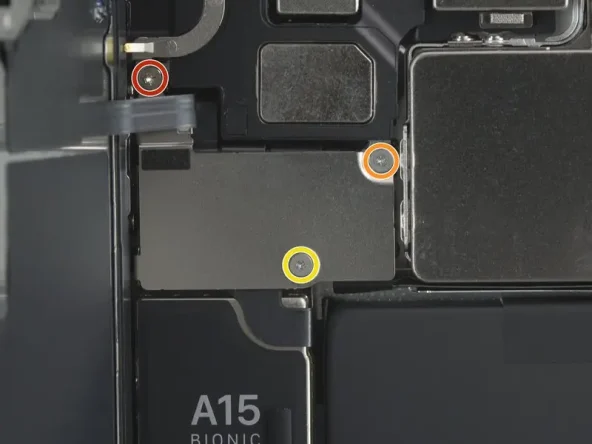
Remove the three screws securing the front sensor interface cover:
One PH000 Phillips head screw, 1.4 mm long
One PH000 Phillips head screw, 1.8 mm long
One PH000 Phillips head screw, 1.2 mm long
Step 10: Disconnect the front sensor
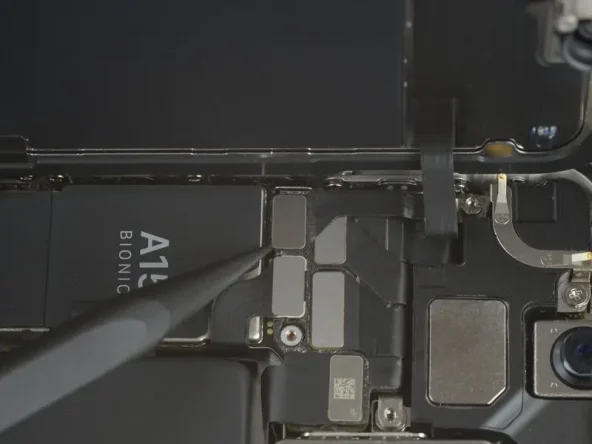
Disconnect the front sensor assembly cable connector using a pry bar or fingernail.
Step 11: Remove the screen
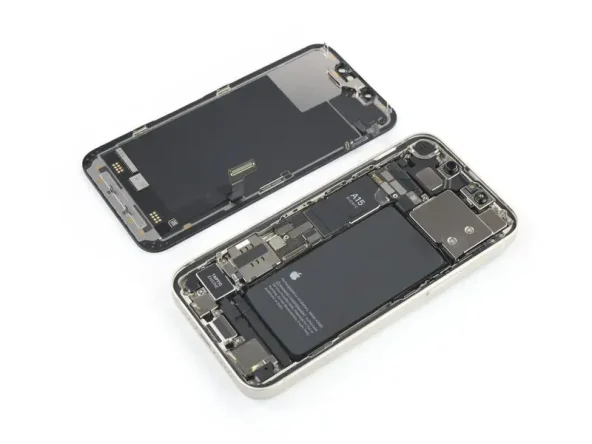
Remove the screen.
If you wish to replace the waterproof adhesive around the edges of the monitor during reassembly, please pause here.


